
In health and social care, the use of assistive technology supports the safety and independence of individuals with limited mobility. Patient hoists are essential aids that facilitate a wide range of daily tasks, from transfers and toileting to bathing and rehabilitation. Understanding the different types of hoisting equipment available is the first step in creating a safer and more efficient care environment.
Patient hoists are generally categorised into two main types: manual and powered. Manual hoists, while often more affordable and portable, can be physically demanding for the caregiver. Powered hoists, on the other hand, use an electric motor to perform the lift, significantly reducing physical strain and improving safety for both the patient and the carer.
Beyond this basic distinction, hoists come in various forms, each designed for a specific purpose. Let’s explore the key types of hoisting equipment used in care environments.
1. Mobile hoists
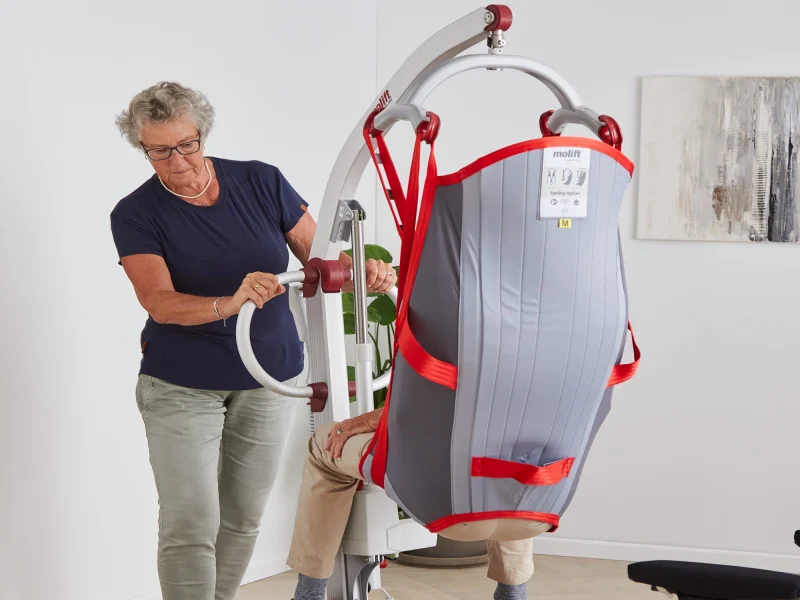
Mobile hoists are arguably the most common and versatile type of patient moving and handling equipment. As their name suggests, they are not fixed in a single location and can be easily moved between rooms. This portability makes them an excellent choice for environments where a patient needs to be transferred between a bed, a chair, a toilet, or a wheelchair within a single room or across a short distance.
Mobile hoists are available in both electric and hydraulic options, with electric models being the most prevalent. They are typically used for two primary purposes:
- For individuals who cannot bear their own weight, a mobile hoist, used with a suitable sling, can lift them entirely from a seated or lying position to a standing or seated position elsewhere
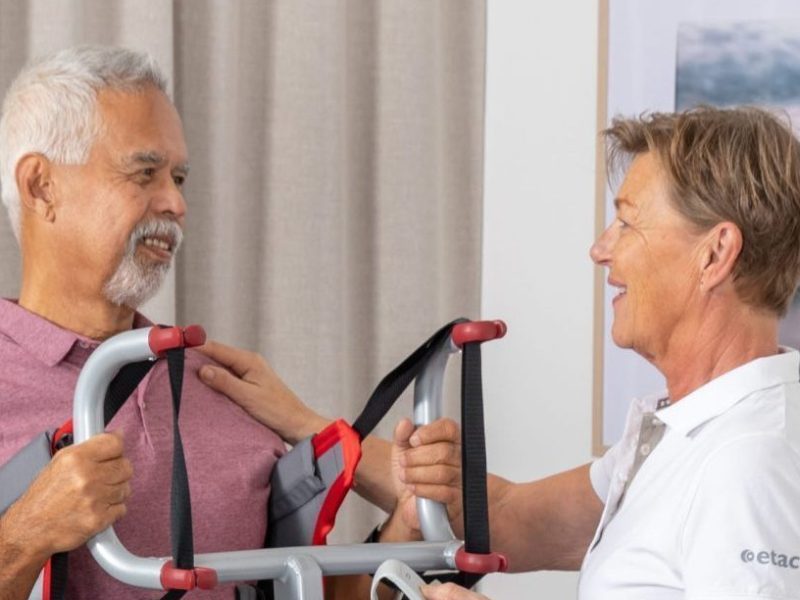
- As discussed in a previous blog post, standing hoists are designed for individuals who have some weight-bearing ability but need help with the sit-to-stand motion
Mobile hoists are a great choice for providing a flexible and robust lifting solution. However, they do have a footprint and can be challenging to manoeuvre on certain floor surfaces, particularly long-pile carpets. When not in use, they require floor space for storage.
2. Ceiling hoists
Ceiling hoists represent the pinnacle of patient handling technology. These systems consist of an overhead track permanently installed on the ceiling, with a motorised lift unit that moves along the track. This design offers a range of significant benefits:
- Unlike mobile hoists, ceiling hoists take up no floor space. The lift unit is stored on the track and is always ready for use, which is particularly beneficial in small or cluttered spaces
- The overhead rail system allows for smooth, effortless transfers over any floor surface, including carpets. The hoist glides along the track, requiring minimal physical force from the caregiver
- Ceiling hoists often have a higher maximum weight capacity than mobile hoists. Their design also allows for a greater lifting range, making it easier to lift a person from the floor or transfer them to a high surface
- With a continuous track system, a patient can be transferred from one room to another (E.G., from a bedroom to an en-suite bathroom) without the need for multiple pieces of equipment
While the initial installation of a ceiling hoist system is a larger investment than a mobile hoist, the long-term benefits in terms of safety, efficiency, and reduced caregiver strain can be substantial.
3. Bath and pool hoists
These hoists are a specialised category designed for safe and dignified transfers in and out of water.
Bath hoists
A bath hoist is a dedicated piece of equipment for assisting individuals in and out of a bathtub. They can be installed with minimal disruption to the existing bathroom fixtures, providing a practical solution for maintaining personal hygiene with increased independence.
Pool hoists
Found in leisure centres, hydrotherapy pools and private residences, pool hoists are specifically for lifting people in and out of swimming pools or hot tubs. They are built to withstand a wet environment and can be either permanently fixed to the poolside or mobile for use in multiple locations.
The importance of hoist slings
While not a hoist themselves, slings are an essential component of any hoisting system. Without a sling, a hoist cannot be used to transfer a person. A sling is a piece of fabric, often with a padded or supportive design, that wraps around the user and connects to the hoist.
Choosing the right sling is as important as choosing the right hoist. Slings come in a variety of types, each serving a specific function:
- General-purpose slings are used for a wide range of transfers, such as from a bed to a wheelchair
- Toileting slings are designed to allow clothing to be easily removed for toileting
- Bathing slings are made from a quick-drying mesh material, perfect for use in wet environments
- Standing slings are used in conjunction with standing hoists to support the user around the torso and under the arms
- In-situ slings are designed to be left in place under the user, reducing the need for repeated transfers and minimising discomfort
At Revived Medical, we understand that the fit and function of a sling is a key component of a safe transfer. It is crucial to select a sling that is compatible with the hoist and suitable for the individual’s size and specific needs, ensuring they are well-supported and comfortable throughout the process.

Final considerations when choosing a hoist
With various types of hoisting equipment available, the selection of a hoist should always be a thoughtful process. Here are some key factors to consider:
- Can the person bear their own weight (standing hoist) or do they need a full lift (mobile or ceiling hoist)?
- Is the hoist for a single-person home or a busy care facility? How much floor space is available? What type of flooring is present?
- Does the hoist need to be able to lift from the floor in the event of a fall?
- Do you need a battery-powered hoist for portability or a hydraulic model?
No matter the equipment, proper training is essential. Both the user and the caregiver must be fully trained on how to use the equipment safely and correctly to prevent accidents.
Choosing the right patient hoist can have a profound impact on the quality of life for an individual with mobility challenges. It promotes independence, provides peace of mind, and, most importantly, protects both the person being lifted and the caregiver from injury. By understanding the different types of hoisting equipment available and considering the unique requirements of each situation, you can make an informed decision that truly elevates the standard of care.
We offer tailored assessments to help you determine the type of hoist that is required. We also provide dedicated maintenance and LOLER inspection services to caregivers and facilities across the North East of England to ensure your hoisting equipment is compliant and functioning optimally. Contact us for further guidance and advice.